The Art of Seeing Through the Data: Why the Businessman Holding a Magnifying Glass is Your New Essential Skill
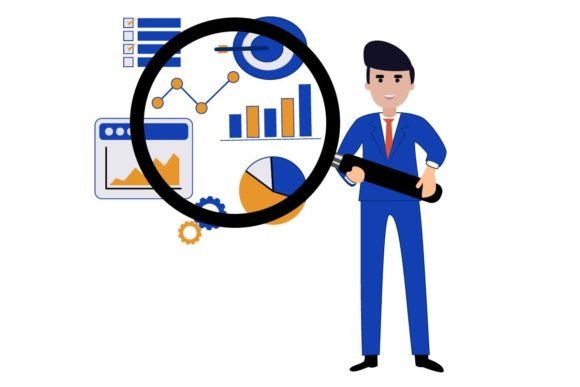
The classic image of the businessman holding a magnifying glass has evolved far beyond a simple symbol of scrutiny. Today, it represents a critical mindset for navigating a world saturated with information. It's no longer about merely looking closely; it's about the deliberate, analytical process of separating signal from noise, insight from raw data. This metaphorical tool is now essential for anyone making decisions, from the solopreneur to the corporate strategist.
The Shift from Broad Strokes to Fine Details
In the era of big data and instant analytics, a paradox has emerged: we have more information at our fingertips than ever before, yet deriving genuine understanding requires a more focused, human-centric approach. The flat design businessman doing infographic data analysis on a dashboard provides the macro view, the high-level trends. But the businessman holding a magnifying glass is the necessary next step—the act of interrogating those trends, questioning their source, and understanding their context. This shift reflects a changing professional habit: moving from passive consumption of reports to active investigation of their underlying truths.
Modern workflows demand this duality. Tools can automate the collection and visualization of data, but they cannot automate curiosity. The professional expectation now includes the ability to zoom in, to ask "why" behind the "what," and to validate the assumptions that colorful charts might silently present. This is where actionable intelligence is born, and where competitive advantage is often found.
Integrating the Magnifying Glass into Contemporary Practices
For creators, marketers, and entrepreneurs, this analytical depth translates directly into practical outcomes. Consider a blogger reviewing website traffic analytics. The infographic shows a spike in visits—a positive macro trend. Applying the magnifying glass mentality means drilling into that spike: Which specific post drove it? What was the reader demographic? Did the bounce rate change? This granular view turns a vague success into a repeatable strategy.
Similarly, for a business owner evaluating sales data, the flat design dashboard might highlight a quarterly decline in a product line. Holding the magnifying glass to that data involves examining customer feedback notes, support ticket trends for that product, and even correlating it with recent changes in marketing messaging. The business prediction derived from this is no longer a simple extrapolation of the downward line; it becomes a nuanced forecast based on identified root causes, leading to smarter inventory or development decisions.
Key Areas for Applying Focused Analysis
- Customer Intelligence: Moving beyond overall satisfaction scores to analyze specific verbatim feedback for emerging pain points or unmet desires.
- Content Performance: Not just counting shares or likes, but investigating which paragraphs or data points within an article are being most cited and discussed.
- Operational Efficiency: Looking past overall productivity metrics to identify the precise steps in a workflow where delays or errors consistently occur.
- Market Trends: Deconstructing a broad industry report to understand the micro-trends affecting your specific niche or local customer base.
Why This Skill is Getting More Attention Now
The evolution towards this detailed focus is driven by several concurrent trends. First, the democratization of analytics tools means that more people have access to high-level data, creating a need for the skill to interpret it deeply. Second, in a fast-moving environment, superficial understanding can lead to significant missteps; the cost of missing a critical detail has increased. Finally, user and consumer expectations have risen—they demand personalized, precise solutions, which can only be built through a detailed understanding of their behaviors and needs.
Technology, while providing the dashboards, also enables the magnifying glass. Features like data drilling, cohort analysis, and advanced filtering are built into many modern platforms, explicitly supporting this investigative process. The lifestyle shift towards remote and asynchronous work further emphasizes its importance, as decisions are often made based on documented data rather than informal, in-office conversations.
Practical Implications and Realistic Applications
Adopting this mindset requires a change in habit, not just in tooling. It means routinely scheduling time not just to review reports, but to explore them. It involves formulating specific questions before opening an analytics suite: "What assumption do I want to test today?" or "Which anomaly from last month do I need to explain?"
For the educator or freelancer, this might mean analyzing which teaching method or service offering yielded the highest retention or client satisfaction, looking at the specific components of that method rather than the overall outcome. For the hobbyist running a community forum, it could involve examining which types of discussion threads lead to the most constructive engagement, focusing on the tone and structure of the initial post.
Recommendations for cultivating this skill start simply:
- Always seek the "layer below" any presented summary figure or chart.
- Practice formulating one "zoom-in" question for every high-level metric you review.
- Correlate data points from different sources—financial data with customer service data, web analytics with content calendar data—to build a more complete, detailed picture.
- Remember that the goal is insight, not just more data; the magnifying glass is a lens for understanding, not merely for collection.
Grounding Business Predictions in Detailed Evidence
The link between detailed analysis and business predictions is fundamental. A prediction grounded in a broad trend is a guess. A prediction informed by a magnified examination of that trend’s drivers, exceptions, and context is a calculated forecast. For instance, predicting next quarter's sales based on last quarter's total is basic. Predicting it based on an analysis of which customer segments drove the sales, which channels they used, and how their purchasing frequency changed, is strategic. This approach naturally mitigates risk and turns prediction into a more reliable planning tool.
Ultimately, the enduring symbol of the businessman holding a magnifying glass reminds us that in an age of automation and aggregation, the human capacity for focused inquiry, skepticism, and deep curiosity remains the ultimate driver of wise decisions and sustainable growth. It is the bridge between the flat design of big data and the textured, complex reality of business and creation.