Crabster Culinary Presentation: A Template for Impactful Communication
In the world of culinary arts, hospitality, and food-related businesses, your story is only as compelling as your presentation. A static PDF or a hastily assembled slide deck can undermine even the most exquisite concept. This is where a dedicated presentation template, like Crabster Culinary Presentation, becomes not just a tool, but a strategic asset. It is a professionally designed PowerPoint template crafted specifically to showcase culinary projects, company profiles, creative agency work, portfolios, and startup pitches with visual flair and structural coherence.
Why a Specialized Template Matters for Culinary & Creative Fields
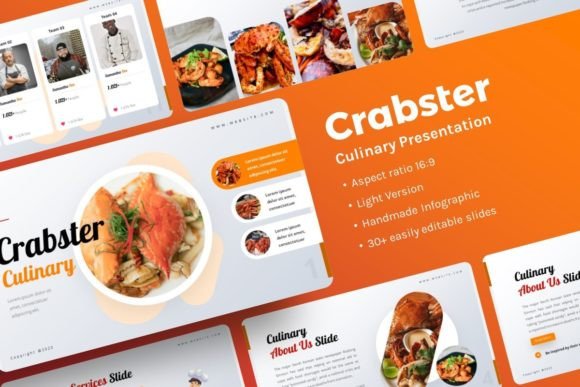
Many professionals and entrepreneurs overlook the importance of visual consistency. They might pull images from various sources, use mismatched fonts, and cobble together slides without a unifying design language. The result is a presentation that feels disjointed, distracting the audience from your core message—whether it’s a new restaurant concept, a food photography portfolio, or a corporate catering profile. Crabster Culinary Presentation addresses this by providing a complete framework: 30 master slides, handcrafted infographics, pixel-perfect illustrations, and a cohesive aesthetic built around the Lobster and Open Sans fonts. It creates an immediate atmosphere of quality and attention to detail, which is exactly what you want to convey.
Overlooking the Power of Master Slides and Structure
A frequent error is treating each slide as a unique canvas, leading to hours of manual formatting and inconsistent layouts. The Crabster Culinary Presentation template is built on master slides. This means the core design—fonts, color placements, logo areas—is predefined. The practical advice here is simple: always start by exploring and understanding the master slide layouts before adding your content. This ensures every slide you add automatically aligns with the overall design, saving you immense time and guaranteeing a professional look. Ignoring this feature is akin to building a kitchen without a blueprint; you’ll waste effort correcting alignment and style issues later.
Misusing Image Placeholders and Source Quality
The template includes drag-and-drop picture placeholder. This is a fantastic feature, but its effectiveness hinges on your source material. A common misunderstanding is that any image will look good in a professional frame. Using low-resolution, poorly lit, or generic stock photos in these elegant placeholders will create a jarring contrast and weaken your credibility. The corrective approach is to leverage the template’s compatibility with high-quality sources like Unsplash, Pixabay, and Pexels, but to be selective. For a culinary presentation, invest time in finding or creating images that match the template’s sophistication. Before you begin, audit your image library. Do your photos convey the same level of craft as the slide design? If not, sourcing better images is your first critical task.
Underestimating the Editable Graphic Elements
Users sometimes see the resizable and editable illustrations and infographics as mere decorative elements. This is a missed opportunity. These graphics are tools for communication. For instance, a customizable infographic can brilliantly illustrate your farm-to-table supply chain, your team’s structure, or a timeline for a restaurant launch. The better approach is to analyze your narrative: where does data or a process need visual simplification? Map those points to the infographic assets in the template. Don’t just use them because they look nice; use them to make complex information accessible and engaging for your audience.
Practical Considerations Before You Use the Template
Before diving into Crabster Culinary Presentation, a few checks can ensure smooth implementation and maximize its value for your specific purpose.
Align Template Style with Your Brand Tone: The template has a distinct character. Review its demo thoroughly. Does its visual voice—from the font choices to the illustration style—complement your culinary brand’s personality? If your brand is minimalist and modern, ensure the template’s more decorative elements can be simplified or used selectively. It’s customizable, but starting with a template that fundamentally aligns with your direction is easier.
Understand the File Inclusions and Requirements: The package includes a .PPTX file and documentation. A practical step often skipped is reading the documentation. It may contain specific instructions for editing vector icons or using master slides efficiently. Also, verify you have the recommended fonts (Lobster, Open Sans) installed, or be prepared to use suitable alternatives if licensing is a concern. This avoids last-minute formatting surprises.
Clarify the Image Situation: As noted, the demo images are for preview only and are not included. This is a standard practice to keep file sizes manageable and avoid copyright issues. Be ready to source your own imagery. Plan this as part of your project timeline, not as an afterthought. Building your presentation around your own authentic photos and logos is what will ultimately make it unique and powerful.
Applying the Template Beyond Literal Culinary Themes
While named for culinary presentation, its application is wisely broad: Creative Agency, Company Profile, Portfolio, Photography, Pitch Deck, Startup. A potential oversight is thinking it’s only for food-related content. The design elements, while sophisticated, are versatile. A creative agency could use it to present a branding project; a photographer for a portfolio showcase; a startup for a product launch deck. The key is to adapt the content while respecting the template’s structure. Replace culinary imagery with your product shots, team photos, or service graphics. The underlying framework of clean layouts, impactful infographics, and balanced typography will continue to serve your narrative, regardless of the industry.
Final Thought: It’s a Foundation, Not a Finished Product
The most constructive way to view Crabster Culinary Presentation is as a high-quality foundation. It provides the walls, the flooring, and the lighting—the professional structure. Your job is to furnish it with your unique story, data, and visuals. Avoid the mistake of treating it as a one-click solution; it’s a tool that requires your thoughtful input. By combining its robust design features with your carefully prepared content, you create a presentation that communicates not just information, but competence, creativity, and credibility. That is the ultimate goal for any professional communicator, and this template puts you on the right path from the very first slide.